Martial arts – in a clenched fist
If I approached you (or if you came into my store to make inquiries) and I tried to sell you a product with a foreign name and an operating system that entailed a sizable number of repetitions in order to activate a poor mechanism of this product.
But it wouldn’t work under pressure.
Would you buy it?
Many are hoodwinked by the marketing of the style of martial art in question which may hide many of the deficiencies that true engineering will expose. The question the consumer needs and should be asking is; how well does it perform under vigorous testing with a feasible testing application? Surely, the same question would be asked when purchasing a washing machine, no one is going to buy a washing machine that can only handle six silk scarfs every third day washed only with a mild soap solution with a pH of 7.
It’s these questions that the buying public should ask but do not consider when looking for a martial art to study.
What’s the difference between a rat and a squirrel … marketing
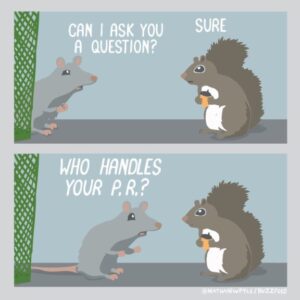
Karate has exceptional marketing. There is a world-wide appeal to the gleaming pine wooden floor that glistens with streaks of sunlight. Intersperse this with the picture-framed kanji that adorn the cardinal points of the room and one is immediately mesmerized by the serene atmosphere. A room built more for inner contemplation than learning to fight.
When as a young boy training at the HQ of Goju-Ryu karate in South Africa, I asked the question of how karate first originated; the answer I first received from my teacher (Sensei) was that a Prince in feudal Japan studied the movements of animals and through watching the actions of various animals leaping, flying, jumping and stalking, the methodology and fighting application of karate was somehow miraculously formed (needless to say, this was made up by the sensei for I believe that he did not actually know the answer himself) I do remember thinking about this explanation a little while afterwards, realising that not all the animals in the world resided in Japan and surely this meant that not a very accurate representation of all ‘animals’ ability was demonstrated. I kept pressing for a more feasible answer and was eventually fobbed off. Joseph Campbell believed that fairy tales are a flexible form that can be reshaped by writers and storytellers to suit their purposes, in this instance he wasn’t far off.
Karate is a combination of two kanji (Chinese characters): kara, meaning empty, and te, meaning hand; thus, karate means “empty hand.” Adding the suffix “-dō” (pronounced “daw”), meaning “the way/path,” karate-dō, implies karate as a total way of life that promulgates introspection, austerity and discipline before actual self-defence or fighting. It steeps itself in a fairy-tale setting with wizened grand masters proving their worth in make-believe combat, consider this paragraph from a world-renowned book on karate: “the masters of the two dojo each chose their best student to demonstrate kata. In China at that time, it was the practice to have a demonstration of kata instead of competition in free style fighting. In this way it was possible to choose a superior martial artist without anyone getting hurt” It is here that the supposed meta impairs its reputation by insisting that solo forms are the paragon of destructive knowledge.
How it finally settled on the word karate and its system is a long journey of cultural misappropriation, convenient forgetfulness and marketing. Karate books on this subject talk about “men in karate-like stances shown on a wall of an ancient Egyptian tomb which dates back perhaps as early as 5000 years ago” Fact checking this claim reveals that the walls of the Middle King tombs of Beni Hasan depict 406 wrestling images, including complex movements similar to modern free-style wrestling.
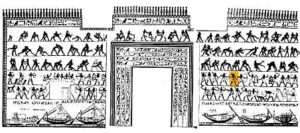
There are other archaeological sightings of wrestling, the caves of Tassili n’Ajjer, Algeria depict early wrestling (5000BC) for example. The Lascaux Cave in France (dating back 15 000 years) show over 1500 etchings and over 600 drawings of which some suggest are depictions of wrestling has been debunked.
By this it would seem that early wrestling images were misappropriated to be karate-figures? We could leave it at that to satisfy karate’s sense of lineage and its genesis. By its rationale these depictions of fighting were actually figures of karate waiting to be discovered centuries later.